



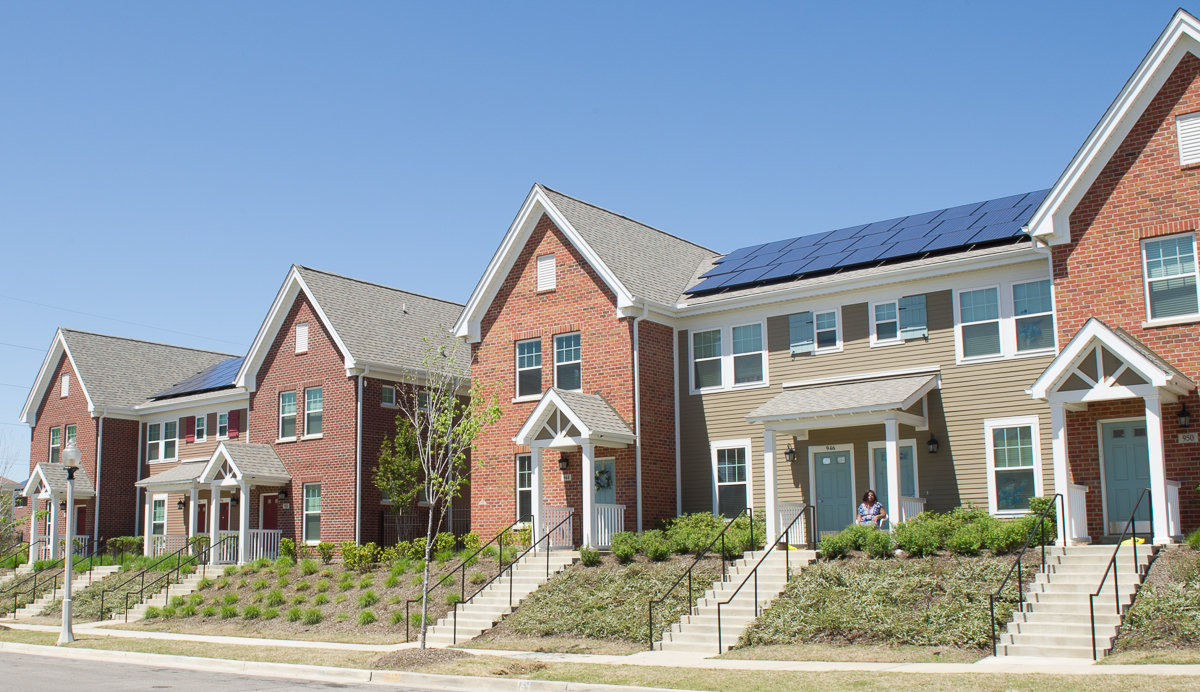
Workforce housing refers to naturally affordable rental housing designed for middle-income earners such as teachers, nurses, retail staff, first responders, and other essential service workers. For investors, workforce housing offers stable demand, consistent occupancy, and resilient long-term returns. For communities, it provides safe, attainable housing that supports local economies and strengthens neighborhood stability.
The term “workforce housing” is used frequently—but often without clarity. Investors hear it described as “stable,” “undervalued,” or “recession-resistant,” while communities view it as a lifeline for the essential workers who keep cities functioning every day.
So what is workforce housing really? And why are investors increasingly focused on it, especially during periods of economic uncertainty? Let’s break it down clearly and practically.
At its core, workforce housing meaning refers to rental housing that is affordable to middle-income households—those who earn too much to qualify for subsidized housing, but not enough to comfortably afford luxury Class A apartments.
These renters typically include:
Workforce housing is commonly found in Class B and Class C multifamily properties, often built between the 1970s and early 2000s. These communities are not luxury-focused; they are clean, safe, functional, and reasonably priced.
Workforce housing is often synonymous with:
Together, these properties represent a substantial share of multifamily affordable rentals across growing U.S. markets.
Demand for workforce housing has accelerated as affordability challenges intensify nationwide.
Key drivers include:
This growing affordability gap has made essential housing demand stronger than ever. Workforce housing fills the space between subsidized housing and luxury rentals—serving the backbone of the economy.
From an investment perspective, workforce housing for investors offers a compelling blend of stability and upside.
1. Consistently High Occupancy
Essential workers need housing regardless of market cycles, supporting reliable occupancy levels—often higher than Class A assets.
2. Lower Rent Volatility
Workforce renters tend to stay longer, resulting in:
3. Strong Performance in Downturns
During recessions, workforce housing demand often increases as renters delay homeownership or downsize from higher-cost units.
4. Significant Value-Add Potential
Most workforce housing assets are older and benefit from renovations, operational improvements, and better management.
Learn more about this approach through value-add multifamily investments.
5. Limited New Supply Competition
Because new workforce housing is rarely built due to cost constraints, existing properties face minimal competition—supporting long-term performance.
Together, these factors make workforce housing investment especially attractive in uncertain markets.
Beyond returns, workforce housing community impact is substantial.
1. Keeps Essential Workers Close to Jobs
Affordable housing near employment centers reduces long commutes, turnover, and labor shortages.
2. Stabilizes Neighborhoods
Long-term residents foster safer, more cohesive communities.
3. Reduces Strain on Public Services
Stable housing availability lowers displacement and emergency housing demand.
4. Supports Local Economies
Businesses depend on a reliable workforce—housing affordability directly affects economic vitality.
5. Prevents Broader Housing Crises
Without workforce housing, affordability pressures cascade across all income levels.
Clarifying misconceptions is critical.
Workforce renters typically earn 60%–120% of Area Median Income (AMI) and seek long-term, stable housing.
Workforce housing assets are often older, well-located, and operationally under-optimized—making them ideal for value-add execution.
Common improvements include:
Because rents are already below replacement cost, even modest upgrades can improve NOI without sacrificing affordability.
(See value-add multifamily investments.)
Secondary and tertiary markets often experience the strongest workforce housing demand due to:
This is why many operators prioritize secondary-market acquisitions as a core strategy.
Effective evaluation requires discipline.
Performance Metrics:
Demographic Metrics:
Property Metrics:
Workforce housing is not a passive “buy anything” strategy—operator expertise matters.
Like all investments, workforce housing carries risk:
Strong operator due diligence is essential to mitigating these risks.
Workforce housing is more than a real estate strategy—it is a cornerstone of stable, functioning communities. For investors, it offers a rare combination of consistent demand, recession resilience, and meaningful social impact. For communities, it provides the foundation essential workers need to live, work, and thrive.
As housing affordability continues to challenge markets nationwide, workforce housing will remain one of the most important—and most valuable—segments of multifamily real estate. Investors who understand this space and partner with experienced operators are uniquely positioned to create lasting financial and societal value.

